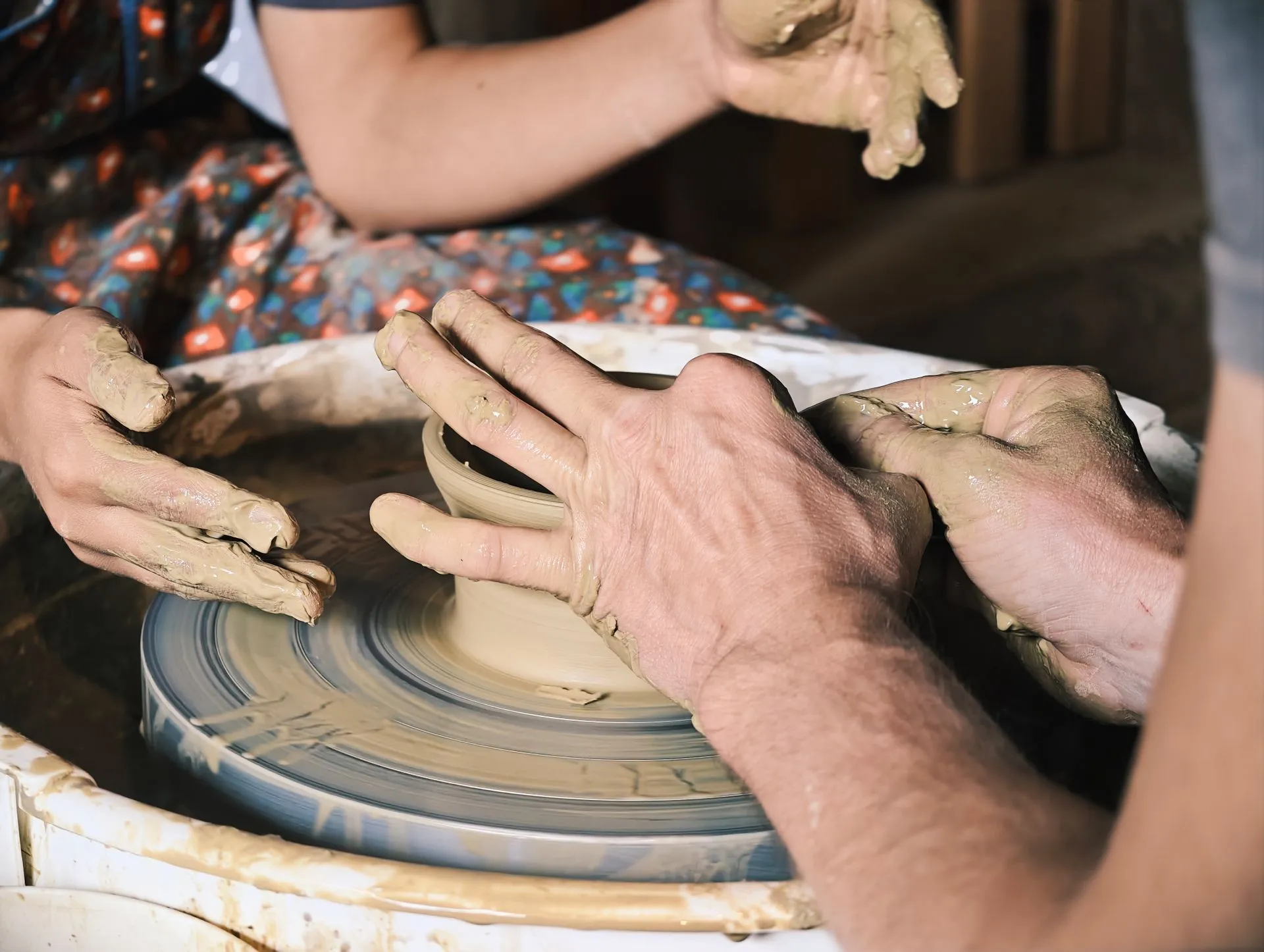
Six Tokyo craft workshops compared on price, length, group size and what you take home, from a $6 chopstick class to a $146 pure-gold kintsugi session with a master artisan.
What You Should Know
- Tokyo craft workshops cover kintsugi, pottery, calligraphy and woodcraft. Three of the six here are kintsugi, the gold repair of broken ceramics, because kintsugi accounts for three of the strongest visitor workshops in the city by review volume. They run at $13, $63 and $146 and differ in materials, length and what you repair.
- Five of the six send you home with the thing you made, the same day. The pottery class is the exception and it matters: the firing fee is not in the price, and finished work is either collected later or posted to you for an optional shipping fee.
- The two kintsugi classes at the same atelier are not the same craft at different prices. The $63 workshop uses synthetic lacquer and substitute gold powder; the $146 one uses real urushi lacquer, which comes from a relative of poison ivy, and real gold. The studio supplies gloves and warns about rashes.
- Four of the six run 60 minutes and three cost under $30. That is short enough and cheap enough to book around other plans rather than building a day around it.
Traditional Craft Workshops in Tokyo
Tokyo craft workshops run from a $6 hour spent shaping a pair of chopsticks to a $146 session repairing ceramics with real gold alongside a master artisan. Traditional crafts in Tokyo are unusually easy to book as a visitor: all six compared here take between one and two hours, need no experience, run in English, and sit a short walk from a station you were probably passing anyway.
What separates them is less the craft than the output. Five of the six hand you a finished object an hour later: chopsticks, a repaired bowl, a gold-seamed accessory, a sheet of calligraphy. The sixth starts something you cannot take with you, because it has to be fired and then collected or posted. That distinction decides whether a workshop fits a trip with three days left on it, and it is the first thing we would check.
Tokyo craft workshops cover kintsugi, pottery, calligraphy and woodcraft, and kintsugi currently accounts for three of the strongest visitor workshops in the city by review volume, which is why three of the six below teach it. Every workshop on this page carries at least 61 reviews: we set a floor of 50 and dropped four well-rated workshops that fell under it, set out in full in the methodology at the end.
The six below are grouped by what you make rather than by score, because four of the six round to 5.0 and the ratings separate very little. Tokyo has at least six chopstick-making workshops, and the one we feature here is the most reviewed of them; our Tokyo chopstick making comparison sets all six side by side. If you are looking for a cultural experience you consume rather than make, our Tokyo tea ceremony guide covers that, and our Tokyo cooking class comparison covers classes that end in a meal rather than an object. For jewellery and blades, our Tokyo ring making workshop comparison and our Japanese knife workshop guide cover two crafts this page does not.
Traveling Tokyo: Shinjuku Chopsticks Making Class
At 5,748 reviews it has by far the deepest record of any craft workshop in Tokyo, more than ten times most of this page, at 97 percent five stars. It costs $6, runs hourly from 9:00am daily, and includes tools, materials and two wood types.
Book NowTokyo Craft Workshops: Side-by-Side Comparison
| Studio | Price | Online Rating | What You Make | Ages | Capacity | Duration | Days Offered | Take It Home Same Day | Extra Costs |
|---|---|---|---|---|---|---|---|---|---|
| Most Reviewed 5.0 Traveling Tokyo Shinjuku Chopsticks Making Class Book Now |
$6 | ⭐ 5.0 (5,748 reviews) Read Reviews |
A shaped and sanded pair of chopsticks | All ages | 30 | 1 hour | Daily | Yes | Premium woods and engraving cost extra |
| Beauty of Japan Kintsugi: Art of Golden Joinery Book Now |
$63 | ⭐ 4.9 (501 reviews) Read Reviews |
A repaired plate, yobitsugi style | 6+ | 15 | 1 hour | Daily | Yes | None; food and drinks excluded |
| Beauty of Japan Pure Gold Kintsugi with Master Artisan Book Now |
$146 | ⭐ 5.0 (227 reviews) Read Reviews |
A plate repaired with real urushi and gold | 10+ | 20 | 2 hours | Daily | Yes | None; gratuities excluded |
| Localized Walking & Food Tours Calligraphy Workshop, Asakusa Book Now |
$50 | ⭐ 5.0 (184 reviews) Read Reviews |
Your own brush calligraphy artwork | 5+ | 10 | 1 hr 30 min | Daily | Yes | None; bottled water excluded |
| GET AROUND JAPAN Kintsugi Accessory Making, Shibuya Book Now |
$13 | ⭐ 5.0 (116 reviews) Read Reviews |
A gold-repaired ceramic accessory | All ages | 6 | 1 hour | Daily | Yes | None; food and drink excluded |
| Uzumako Ceramic Art School Japanese Pottery Class Book Now |
$26 | ⭐ 4.8 (61 reviews) Read Reviews |
Two or three thrown or built pieces | 3+ | 25 | 1 hour | Tue, Thu, Sat, Sun | No, pieces must be fired | Firing fee per piece; shipping optional |
Prices and ratings read from live operator data on October 6, 2026. Figures quoted by operators in yen were converted at that day's rate and move with the exchange rate. Ratings are rounded to one decimal place, which is why four of the six read 5.0. Every workshop here carries at least 61 reviews, and the most-reviewed carries 5,748.
What to Expect in a Tokyo Craft Workshop
- 01On arrival
Find the studio, not the landmark
All six meet at a fixed address rather than offering pickup, and most are upstairs or in a basement rather than on the street. One sits in Shinjuku, one in Shibuya, one in Asakusa, one in Minato near Tokyo Tower, and the two kintsugi classes share a basement atelier reached by a swing gate and a flight of stairs.
- 02First 10 min
The context, briefly
Each craft comes with a short explanation of where it sits in Japanese culture. The kintsugi workshops lean hardest on this, because the philosophy of repairing visibly rather than hiding the break is the point of the object.
- 03Demonstration
Watch it done once
The instructor makes a sample so you can see the whole sequence before you start. The pottery class builds this into its first hour explicitly.
- 04The main hour
Your hands on the material
Shaping and sanding, bonding and gilding, brushwork or throwing. No experience is assumed on any of the six, and tools, aprons and materials are supplied throughout.
- 05Finishing
Drying, setting and tidying
Most crafts here need a short set or dry before handling. This is where the pottery class diverges: your pieces go to the kiln rather than into your bag.
- 06Before you go
Wrapped and carried out
Five of the six send you off with the finished object, usually boxed or bagged for travel. Only the pottery pieces stay behind to be fired.
- 01
Find the studio, not the landmark
All six meet at a fixed address rather than offering pickup, and most are upstairs or in a basement rather than on the street. One sits in Shinjuku, one in Shibuya, one in Asakusa, one in Minato near Tokyo Tower, and the two kintsugi classes share a basement atelier reached by a swing gate and a flight of stairs.
On arrival - First 10 min02
The context, briefly
Each craft comes with a short explanation of where it sits in Japanese culture. The kintsugi workshops lean hardest on this, because the philosophy of repairing visibly rather than hiding the break is the point of the object.
- 03
Watch it done once
The instructor makes a sample so you can see the whole sequence before you start. The pottery class builds this into its first hour explicitly.
Demonstration - The main hour04
Your hands on the material
Shaping and sanding, bonding and gilding, brushwork or throwing. No experience is assumed on any of the six, and tools, aprons and materials are supplied throughout.
- 05
Drying, setting and tidying
Most crafts here need a short set or dry before handling. This is where the pottery class diverges: your pieces go to the kiln rather than into your bag.
Finishing - Before you go06
Wrapped and carried out
Five of the six send you off with the finished object, usually boxed or bagged for travel. Only the pottery pieces stay behind to be fired.
All six workshops are short, indoor and almost identical in shape whatever the craft: an introduction, a demonstration, the making, then finishing. The variation is in how much of the hour is talk and how much is your hands on the material.
Our take (you are booking a person, not a studio): Across all six, the reviews name individuals far more often than they name the business. Guests write about Shino at the chopstick studio, Mei at the calligraphy workshop, Master Taku at the kintsugi atelier. That is the nature of a two-person premises, and it cuts both ways: the warmest reviews here are warmer than anything a coach tour gets, and the few poor ones are almost all about one person on one day rather than about the craft. We would read the most recent reviews rather than the lifetime average before booking any of them.
Best Craft Workshops in Tokyo
Six workshops, ordered by how confidently we would book them. Our pick leads on review depth and on price, at 5,748 reviews and $6, which is the same evidence quoted in its card rather than a separate judgement. Four of the six round to 5.0, so the labels describe what each workshop is rather than ranking them by score. Decide what you want to carry home before you compare prices: it narrows this list faster than anything else.
Traveling Tokyo: Shinjuku Chopsticks Making Class
The deepest review record of any craft workshop in Tokyo at 5,748, more than ten times most of this page, with 97 percent at five stars. You shape, sand and finish a pair of chopsticks from high-grade timber in under an hour, with no experience assumed and no age limit. It runs daily with hourly starts from 9:00am, which makes it the easiest thing on this page to fit around something else, and tools, materials and two standard wood types are included. Guests describe it as a four-step process: choose your timber, shave, sand, then finish. The package is better than the price suggests, with reviewers mentioning a presentation pouch at the end and being sent off with their wood shavings, which the studio suggests using as a drawer freshener with a drop of oil. Two details come up repeatedly and neither is in the listing: the timber darkens substantially once oiled, with oiled samples at the counter to choose from, and you can take your wood shavings away in a bag. The $6 covers the plain timbers. Premium woods and engraving both cost extra, so a personalised pair in a nicer wood is a different number from the headline one. It is on the 10th floor of the Shinjuku West Building, and finding the entrance is the most common complaint in its reviews by some margin. We compare it against five rival chopstick workshops on our dedicated page.
Check availabilityBeauty of Japan: Kintsugi, Art of Golden Joinery
The best-known kintsugi class in Tokyo by review volume, at 501 reviews and 4.9. You work yobitsugi, the style that joins contrasting materials into the break rather than hiding it, on a vessel made by the studio's own artisan, and you take the finished plate home the same day. Equipment and the plate are in the price. The thing to understand before booking is the materials: this class uses synthetic lacquer and substitute gold powder rather than the real thing. The studio is explicit that the synthetic lacquer does not cause skin irritation, which is the trade-off it is making, and at 94 percent five stars guests are plainly happy with it. Two reviewers mention the studio also sells a take-home kit so you can keep practising. The one caveat worth reading before you book is administrative rather than artistic: a guest who booked the wrong date in December 2025 reported being refused both a change and a refund, and paying twice. Check the date on the confirmation.
Check availabilityBeauty of Japan: Pure Gold Kintsugi with a Master Artisan
Two hours with Master Taku using genuine urushi lacquer and real gold powder, at the same atelier as the $63 class. It is the most expensive workshop here by $83, and the materials are what the extra money buys. Read the safety note before booking rather than after: urushi is tapped from a tree in the poison ivy family, the studio provides gloves, asks you to follow precautions to avoid a rash, and states it cannot take responsibility if you touch the lacquer directly. If that gives you pause, the $63 class teaches the same technique with synthetic materials. At 99 percent five stars from 227 reviews, most people who book it know what they came for. It is also the most instructor-dependent booking on this page: Master Taku is named directly in roughly one in seven of the recent reviews we read, and the clearest dissent comes from a guest with art training who found the artisan outstanding at the craft but thin on explanation when pressed for detail. If you are coming for technique rather than for the object, that is the risk you are taking.
Check availabilityGET AROUND JAPAN: Kintsugi Accessory Making
A third kintsugi option and a genuinely different one: an hour in Shibuya bonding ceramic fragments and finishing them in gold powder to make a wearable accessory rather than repairing tableware. At $13 it is the second-cheapest workshop on this page and by some distance the cheapest introduction to the craft, with all materials and the ceramic piece included. Groups cap at six, the smallest here. If you are curious about kintsugi but not sure you want to spend $63 or $146 finding out, this is the hour that answers the question. Guests are clear-eyed about what makes it possible: real kintsugi needs long drying between stages, and reviewers describe this as a compressed version built to finish inside an hour rather than the full process. It is also the one several people mention booking as a rainy-day option, since it is entirely indoors.
Check availabilityLocalized Walking & Food Tours: Calligraphy in Asakusa
Ninety minutes of brush calligraphy in Asakusa with an English-speaking instructor, all tools rented, materials and entrance fees included, and your finished artwork to take away. It holds 5.0 from 184 reviews with 99 percent at five stars, which is roughly triple the review record of any other Tokyo calligraphy class, so it is the one we would book without hedging. Four start times daily from 10:00am to 5:00pm and a group cap of ten. Only bottled water is excluded. It meets at the Tokyo Tourist Lounge in Asakusa, a few minutes from Sensoji. What guests write about most is not the artwork but the stillness: reviews repeatedly describe the focus on breathing, posture and deliberate movement, and several say they came out calmer than they went in. Most frame the finished piece as something they hang at home rather than a souvenir they file away.
Check availabilityUzumako Ceramic Art School: Japanese Pottery Class
An hour at a working ceramics school near Tokyo Tower, taught in English, where you make two or three pieces and then choose which ones you want fired. This is the one workshop here you do not walk away from with your work, and the pricing follows: the $26 is the trial-class fee, the firing fee per piece is extra, and shipping the finished work to you is an optional cost on top. Plan for a second visit or a parcel. Groups run up to 25, the largest here, it operates Tuesday, Thursday, Saturday and Sunday only, and it takes children from three. At 4.8 it carries the lowest rating on this page, which still means 89 percent five stars. Two things from the reviews are worth more than the rating. First, the school is in Shiba, in Minato, not Shibuya, and at least one guest missed the class entirely after confusing the two. Second, guests who did pay to have work fired, glazed and posted home describe the cost as reasonable rather than a sting, which is a gentler picture than the listing implies. Several also note you make as many pieces as you can in the hour and then choose which to keep.
Check availabilityPrices are per person and were read from live operator data on October 6, 2026. Amounts quoted by operators in yen were converted at that day's rate, so they move with the exchange rate.
What You Take Home, and When
Five of the six workshops here hand you the finished object before you leave. The pottery class does not, because its pieces have to be fired first. This is the detail the listings bury, and for a short trip it decides the booking.
| Workshop | What you leave with | Same day? | What it costs beyond the fare |
|---|---|---|---|
| Traveling Tokyo | A finished pair of chopsticks | Yes | Premium woods and engraving |
| Beauty of Japan (synthetic) | A repaired plate | Yes | Nothing |
| Beauty of Japan (pure gold) | A plate repaired in real gold | Yes | Nothing |
| GET AROUND JAPAN | A gold-repaired accessory | Yes | Nothing |
| Localized Walking & Food Tours | Your calligraphy artwork | Yes | Nothing |
| Uzumako Ceramic Art School | Two or three unfired pieces | No | Firing fee per piece, plus optional shipping |
Our take (check the ward, not the station name): The pottery school is in Shiba, in Minato near Tokyo Tower. It is not in Shibuya, where another workshop on this page genuinely is. A reviewer found that out the hard way, missing the class entirely after reading one for the other. One of these six is in Shinjuku, one in Shibuya, one in Asakusa, one in Shiba, and the two kintsugi classes share a basement atelier; it is worth putting the actual address in your phone rather than the neighbourhood.
The pottery class is still worth booking, and at $26 for an hour it is good value as an hour. It just is not a souvenir run. If you have a week left in Japan and a forwarding address you trust, it works; if you fly home in three days, one of the other five will serve you better.
One further thing worth packing for. A repaired plate and a wet calligraphy sheet both need somewhere flat and stable to travel, and a day pack full of shopping is not it. The studios will wrap what they can, but the chopsticks are the only output here that genuinely survives being carried around for the rest of the afternoon.
What a Tokyo Craft Workshop Costs
The six here run from $6 to $146 per person. Price tracks materials more closely than time: the two-hour pure-gold kintsugi class costs roughly twenty-four times the one-hour chopstick workshop, and most of that difference is literal gold.
Under $30
Three of the six: chopsticks at $6, kintsugi accessory making at $13 and the pottery trial class at $26. All run an hour. Two of the three are the cheapest serious things you can book in Tokyo, and the third has a firing fee behind it, so read that row before treating $26 as the final number.
$50 to $63
The Asakusa calligraphy class at $50 for 90 minutes, and the synthetic-lacquer kintsugi class at $63 for an hour. Both include every tool and material, both run daily with several start times, and between them they hold 685 reviews, more than the rest of this page outside our top pick.
The top of the range
One workshop: two hours of kintsugi with Master Taku using genuine urushi lacquer and real gold powder. It is the most expensive thing here by $83, and what the money buys is the materials and the artisan rather than extra time. The same atelier teaches the same technique in synthetic materials for $63.
What is rarely included
None of the six includes hotel pickup. Food and drink are excluded on all three kintsugi classes, and bottled water on the calligraphy class. The only genuinely open-ended costs on this page are the pottery firing fee and the optional wood upgrades and engraving at the chopstick workshop.
Prices read from live operator data on October 6, 2026, per person. Amounts quoted in yen were converted at that day's rate and move with it.
Our Take
If we were booking one of these ourselves we would start from the lacquer question, not the price. Three of the six are kintsugi, and the difference between the $63 class and the $146 one is not an hour of extra tuition: it is synthetic lacquer and substitute gold against real urushi tapped from a poison ivy relative and genuine gold powder. One of those comes with gloves and a warning about rashes. Decide which of those two things you actually want to spend an afternoon doing, and the rest of this page gets much simpler.
Tips for Booking a Tokyo Craft Workshop
- Decide what you want to carry home first. It narrows six options to two or three faster than price does. Five of these hand you the object the same day; the pottery class does not, and its firing fee is not in the headline price.
- If you are booking kintsugi, check which lacquer. The $63 class uses synthetic lacquer and substitute gold and says plainly that it does not irritate skin. The $146 class uses real urushi, which comes from a poison ivy relative; gloves are provided and the studio asks you to follow its precautions.
- Only one of the six does not run daily. The pottery class is Tuesday, Thursday, Saturday and Sunday. The other five run every day, several with start times through the afternoon.
- The cheap ones are not the short ones. Price and duration barely correlate here. The $6 chopstick class and the $63 kintsugi class both run an hour; the $50 calligraphy workshop runs 90 minutes for less than the kintsugi one.
- Check the group cap if that matters to you. It ranges from six to thirty. The chopstick class is the largest at 30 and the pottery class next at 25, the kintsugi accessory workshop is the smallest at six, and the rest sit between ten and twenty. None of the six is private.
- Book a short one between other things. Four of these run 60 minutes and the chopstick workshop starts hourly from 9:00am, so it slots into a Shinjuku afternoon without planning. The calligraphy workshop meets at the Tokyo Tourist Lounge in Asakusa, a few minutes from Sensoji.
- Visiting in September? Our Tokyo in September guide covers typhoon season and the rainy days when an indoor workshop is the easiest plan.
- Allow time to find the door. These are small premises rather than visitor centres: a fifth-floor unit, a basement reached by a swing gate and stairs, a B1 restaurant floor, a ground-floor school in a residential block. Every listing gives a Google Maps search term, and it is worth using it.
Where to Stay in Tokyo
Staying in Tokyo or planning a trip? Here are three well-reviewed hotels, with live prices from our booking system. Rooms at the best-rated hotels are usually the first to go, especially in peak season and over holidays, so it's worth locking in your stay before availability fills up.
Compare Live Tokyo Hotel Prices
Live rates for a three-night stay for two adults, checking in about a month from now. Change the dates at checkout and book with instant email confirmation.
- Instant confirmation by email
- Live rates, not brochure prices
- Free cancellation on selected rates
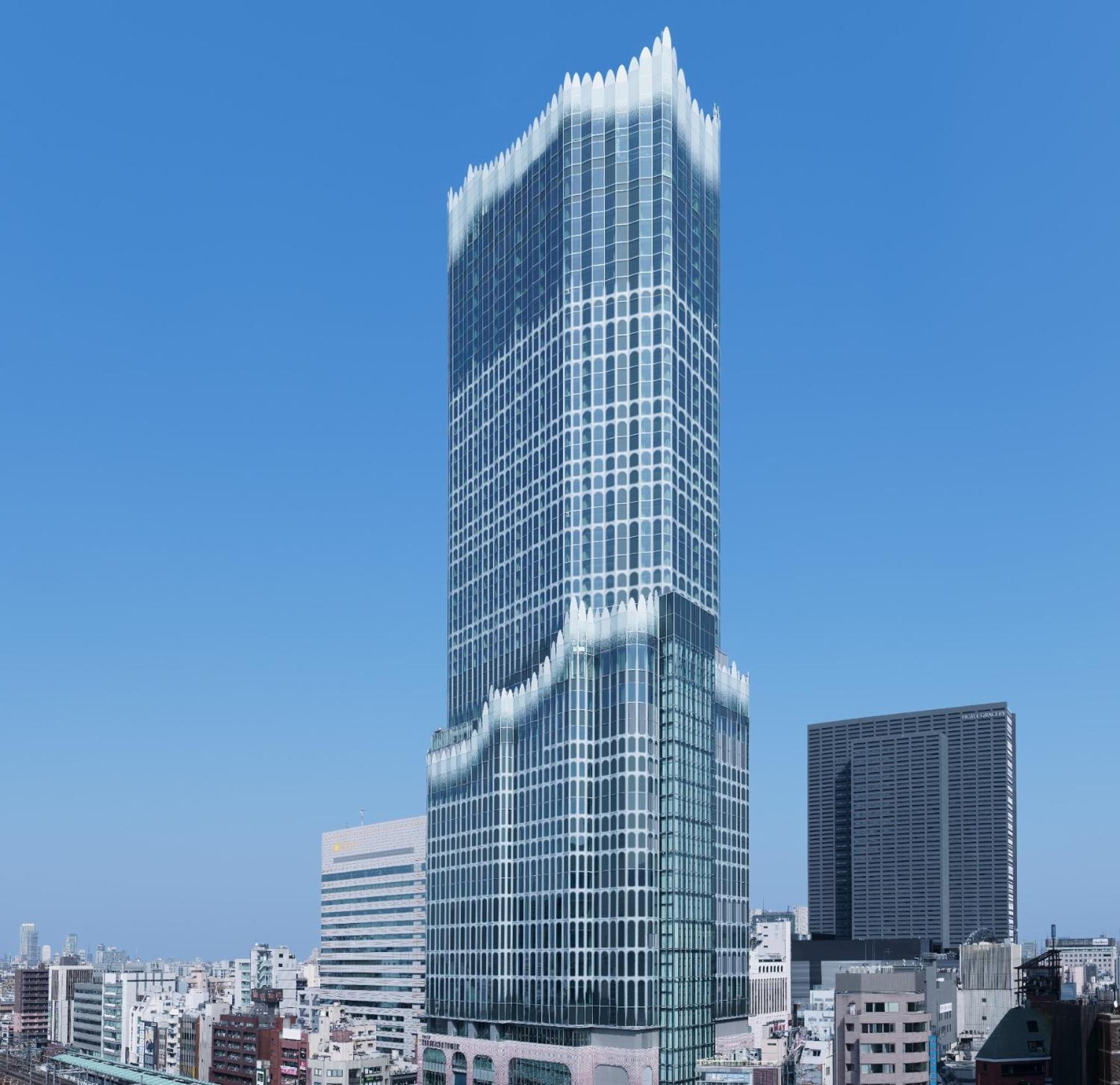


HOTEL GROOVE SHINJUKU, A PARKROYAL Hotel
Rooms from the 18th floor up in the Tokyu Kabukicho Tower, about 700 metres from Shinjuku Station; 9.1 on 3,823 reviews, and its 100 most recent average 9.3, with the views the most praised. There is no real lobby, and Kabukicho's nightlife is right outside.
Book now on:


hotel MONday Asakusa
A simple 3-star about 300 metres north of Senso-ji and a 3-minute walk from the Tsukuba Express; 9.4 on 2,989 reviews, with the location, staff and cleanliness most praised. The lowest rate on this list in every month we sampled; rooms are tight for three, and check-out is at 10 am.
Book now on:


The Tokyo Station Hotel
Inside the 1914 red-brick Tokyo Station building, with a spa and several restaurants; 9.5 on 2,106 reviews, and the highest recent average on this list at 9.6. By far the dearest hotel here, and some rooms overlook the tracks.
Book now on:
Estimated nightly rate for a 3-night stay, 2 adults. Final price on Expedia or Booking.com.Room only. Local taxes and fees are added at checkout and can add roughly 20%.
How We Selected These Workshops
The Local Japan Guides team judged Tokyo craft workshops on what decides whether an hour making something is worth the fare: what you actually produce, whether you can take it with you, what the materials really are, and what the listed price leaves out. We compared price, duration, group size, age limits, materials, inclusions, schedule and review volume. The labels on each card describe what that workshop is rather than ranking it by score, because four of the six round to 5.0 and the ratings separate almost nothing between them. We set a floor of 50 reviews for this page. A craft workshop is a small operation run by one or two people, so a 5.0 built on fifteen or twenty reviews tells you very little about the day you turn up. Several well-rated workshops were dropped on that rule alone, among them a hanko seal-carving class with 22 reviews, a plastic food-sample workshop with 30, a miniature-garden class with 38 and a kanji t-shirt workshop with 46. The six that remain carry between 61 and 5,748 reviews each. Three further calligraphy classes did clear the 50-review floor, at 73, 67 and 65 reviews. We left them out as duplicates of a format already represented here by a class with 184 reviews, rather than filling half the page with the same craft. We also limited this page to workshops where you make a physical object. Tokyo's catalogue is full of samurai, ninja and swordsmanship experiences that rank well for craft-adjacent searches, and several of them are excellent, but they are performances and lessons rather than craft workshops. For the same reason we excluded cooking and tea classes, which we compare on their own pages. We verified every listing against live operator data on October 6, 2026, confirming each was active, Tokyo-based and currently bookable, and we checked review recency on each one. All six had reviews within the last three months, and four within the last two weeks. To be explicit about how this page is made and paid for: we have not taken these workshops ourselves, and nothing here is written as though we had. Our judgements come from operator listing data and published guest reviews. Prices were read from live data on October 6, 2026, and those quoted in yen were converted at that day's rate, so they move with the exchange rate. Booking links are affiliate links and we may earn a commission if you book through them, at no extra cost to you. No operator paid for inclusion, for a label, or for its position in the table.
Frequently Asked Questions
How much does a craft workshop in Tokyo cost?+
Between $6 and $146 per person across the six compared here, read from live operator data on October 7, 2026. Three cost under $30. Price tracks materials more than time: the $146 kintsugi class uses real gold and genuine urushi lacquer, while the $6 chopstick workshop runs the same hour as a $63 one.
What traditional crafts can you try in Tokyo?+
The six on this page cover kintsugi, the gold repair of broken ceramics, at three different price and material levels; brush calligraphy in Asakusa; pottery at a working ceramics school; and chopstick making in Shinjuku. Kintsugi is by far the easiest to book at short notice, which is why half this page is given over to it.
Do you take home what you make at a Tokyo craft workshop?+
On five of the six, yes, the same day. The pottery class is the exception: you make two or three pieces and choose which to have fired, the firing fee is charged separately from the class fee, and the finished work is either collected later or posted to you for an optional shipping cost.
Are Tokyo craft workshops suitable for beginners?+
All six state that no experience is needed, and materials, tools and aprons are supplied. Four run 60 minutes and the other two 90 and 120, which is built around someone who has never done the craft before. The pottery class begins with the instructor making a sample before you start, and the calligraphy workshop includes rental of every tool you need.
Can children do craft workshops in Tokyo?+
Most of them. The chopstick and kintsugi accessory workshops accept all ages, the pottery class takes children from three, and the calligraphy workshop from five. The synthetic-lacquer kintsugi class starts at six. The highest minimum is the pure-gold kintsugi class at ten, which makes sense given it uses real urushi lacquer.
What is kintsugi and which Tokyo class should I book?+
Kintsugi is the Japanese practice of repairing broken ceramics with lacquer and gold so the repair is visible rather than hidden. Three classes here teach it. The $13 Shibuya workshop makes a wearable accessory and is the cheapest introduction. The $63 class has the deepest review record and uses synthetic lacquer that does not irritate skin. The $146 class uses genuine urushi and real gold with a master artisan, and the studio provides gloves and asks you to follow its precautions.
How long do Tokyo craft workshops take?+
Between one and two hours. Four of the six run 60 minutes, the Asakusa calligraphy workshop runs 90, and the pure-gold kintsugi class runs two hours. Several offer start times through the day, including the chopstick workshop, which begins every half hour, so they are easy to book around other plans.
Where in Tokyo are the craft workshops?+
Shinjuku has the chopstick workshop and Shibuya the kintsugi accessory class. The Asakusa calligraphy workshop meets at the Tokyo Tourist Lounge, minutes from Sensoji. The pottery school is in Minato near Tokyo Tower, and the two Beauty of Japan kintsugi classes share a basement atelier. None of the six offers hotel pickup.
Affiliate note: Some links on this page are affiliate links. If you book through them, we may earn a small commission at no additional cost to you.