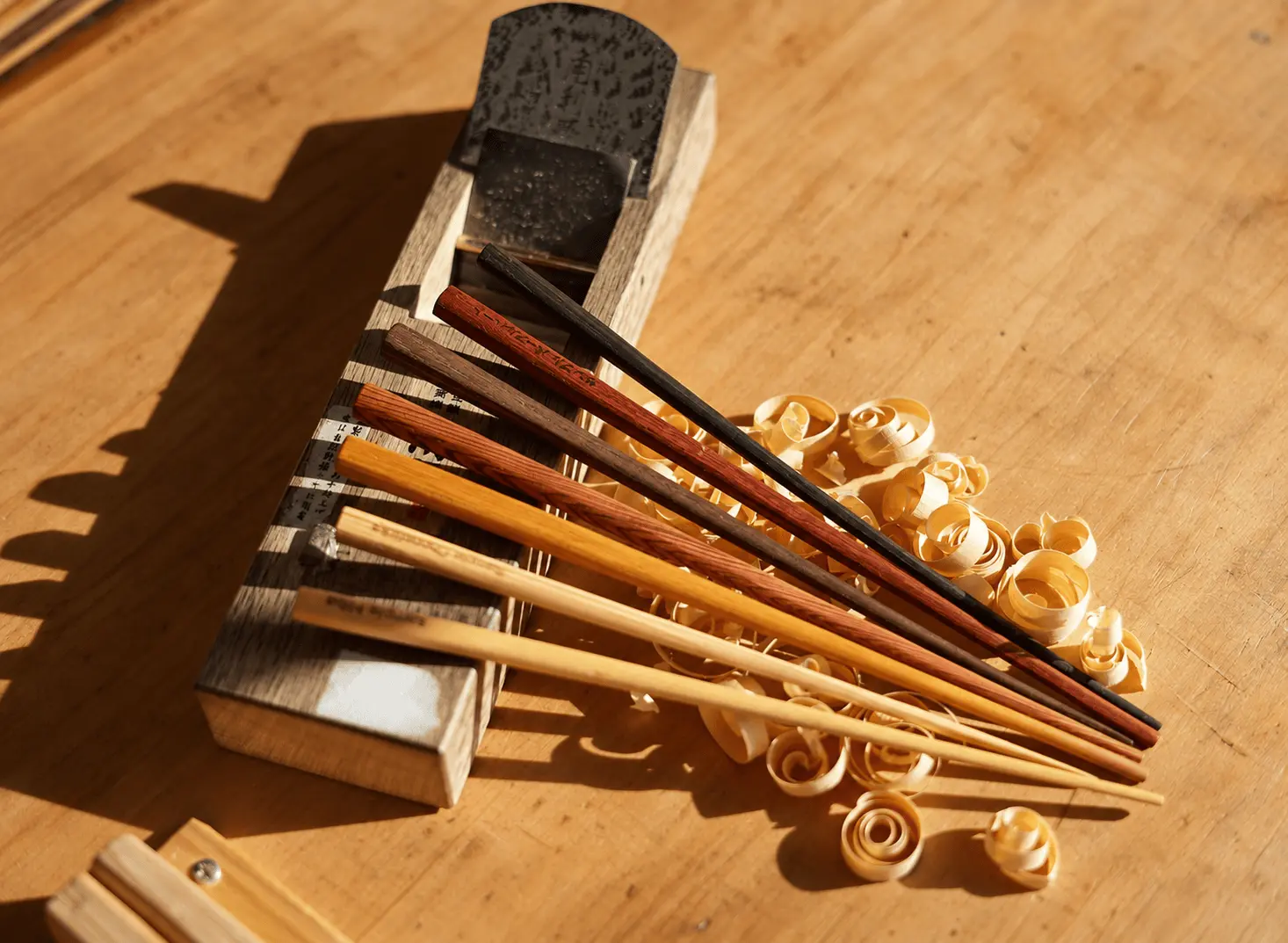
Six Tokyo chopstick making workshops compared on price, neighbourhood, group size and how many woods are included, from $6 in Shinjuku to $9 in Shibuya.
What You Should Know
- Chopstick making is the cheapest hands-on craft we have compared in Tokyo. Four of these six workshops cost $6 and the other two cost $9, and every one of them runs a full hour and sends you home with the chopsticks.
- The price is not the variable. All six run 60 minutes and every fare covers the workshop, the tools and the timber you work. What actually differs is the neighbourhood, the group size, which runs from ten to thirty, and the wood: four listings name English-speaking or bilingual staff, and wood choice varies substantially, with some including several types and one supplying a standard timber with no choice at all.
- Wood choice is where the upsells sit. Two workshops include two wood types in the fare and charge for premium timbers; two include three from a range of over ten. Engraving is an optional extra on several, not a standard inclusion.
- These workshops are busy. The six here hold more than 10,000 reviews between them, and the largest has over 5,700 on its own, so same-week availability is usually good even in peak season.
Chopstick Making Workshops in Tokyo
Chopstick making in Tokyo costs between $6 and $9, runs one hour, and ends with a pair of hand-shaped chopsticks you take home the same day. At $6 it is among the cheapest bookable craft workshops we have found in Tokyo, and the six compared here hold more than 10,000 reviews between them.
The craft itself is simple and genuinely hands-on: you pick a timber, then shape, sand and finish a square blank into a tapered pair, usually at a bench with an instructor working across from you. No experience is assumed anywhere, children are accepted at five of the six, and the whole thing fits in the gap between lunch and an afternoon somewhere else.
Because the format and the price barely move between operators, this page compares the things that do: which neighbourhood you want to be in, how many people share the bench, how many woods you can pick from without paying extra, and whether engraving your name costs more. For the wider category, our Tokyo craft workshop comparison sets chopstick making against kintsugi, calligraphy and pottery. If you want another souvenir you make yourself, our ring making workshop guide and our Japanese knife workshop guide compare those classes.
Traveling Tokyo: Shinjuku Chopsticks Making Class
At 5,748 reviews it has more than twice the record of any other chopstick workshop in Tokyo and over ten times most of them, at 97 percent five stars. It costs $6, runs hourly from 9:00am daily, and includes tools, materials and two wood types.
Book NowTokyo Chopstick Making Workshops: Side-by-Side Comparison
| Studio | Price | Online Rating | Neighbourhood | Ages | Capacity | Duration | Days Offered | Woods Included | Extras |
|---|---|---|---|---|---|---|---|---|---|
| Most Reviewed 5.0 Traveling Tokyo Shinjuku Chopsticks Making Class Book Now |
$6 | ⭐ 5.0 (5,748 reviews) Read Reviews |
Shinjuku | All ages | 30 | 1 hour | Daily | Two types free | Premium woods cost extra; 10th floor, Shinjuku West Building |
| Traveling Tokyo Asakusa Chopsticks Making Class Book Now |
$6 | ⭐ 5.0 (2,202 reviews) Read Reviews |
Asakusa | All ages | 15 | 1 hour | Daily | Two of 8+ types | Engraving and colours cost extra; bilingual instructor |
| Japan Guide Star Chopstick Making Workshop, four locations Book Now |
$6 | ⭐ 5.0 (1,106 reviews) Read Reviews |
Shinjuku, Shibuya, Asakusa or Ginza | All ages | 30 | 1 hour | Daily | Three of 10+ types | Only option that lets you pick the neighbourhood at booking |
| Kurohashi Studio Make Your Own Chopsticks, Shibuya Book Now |
$9 | ⭐ 5.0 (544 reviews) Read Reviews |
Shibuya | All ages | 15 | 1 hour | Daily | Basic choices free | Engraving ¥1,000; highest share of five-star reviews here |
| Japan Guide Star Chopstick Making Workshop with Artisan Book Now |
$6 | ⭐ 5.0 (521 reviews) Read Reviews |
Taito, near Asakusa | All ages | 10 | 1 hour | Mon to Fri | Three of 10+ types | Smallest group here; held in a working chopstick shop |
| Sushi Making Tokyo Customize Your Chopsticks Book Now |
$9 | ⭐ 4.9 (180 reviews) Read Reviews |
Asakusa | 4+ | 30 | 1 hour | Daily | Standard wood | Three minutes from Asakusa Station; English-speaking instructor |
Prices and ratings read from live operator data on October 7, 2026. Figures quoted by operators in yen were converted at that day's rate and move with the exchange rate. Ratings are rounded to one decimal place, which is why five of the six read 5.0. Every workshop here carries at least 180 reviews.
What to Expect in a Tokyo Chopstick Workshop
- 01On arrival
Find the floor, not just the street
None of the six offers pickup. Two of them are on 10th floors above street level and one is a 5th-floor unit, so the building matters as much as the address. Every listing gives a station exit or a map search term.
- 02First 10 min
Choose your wood
This is the step that differs most. Two workshops include two types and charge for premium timbers; two include three from a range of more than ten; one supplies a standard wood with no choice at all.
- 03Shaping
Square blank to tapered pair
You work a square length of timber down towards the tip, usually with a plane or blade at a bench. No experience is assumed on any of the six, and tools and materials are supplied throughout.
- 04Sanding
The longest part of the hour
Progressively finer papers take the facets off and bring the grain up. This is where most of the hour goes, and where the finish quality that reviewers mention is actually decided.
- 05Finishing
Oil, and optional personalisation
A finishing coat brings out the timber. Engraving your name or adding colour is a paid extra at several studios rather than part of the fare, so decide at booking rather than at the bench.
- 06Before you go
Carried out the same day
All six send you home with the finished pair, usually wrapped or pouched. Finished chopsticks are flat, light and easy to pack, which makes them one of the simpler craft souvenirs to carry home.
- 01
Find the floor, not just the street
None of the six offers pickup. Two of them are on 10th floors above street level and one is a 5th-floor unit, so the building matters as much as the address. Every listing gives a station exit or a map search term.
On arrival - First 10 min02
Choose your wood
This is the step that differs most. Two workshops include two types and charge for premium timbers; two include three from a range of more than ten; one supplies a standard wood with no choice at all.
- 03
Square blank to tapered pair
You work a square length of timber down towards the tip, usually with a plane or blade at a bench. No experience is assumed on any of the six, and tools and materials are supplied throughout.
Shaping - Sanding04
The longest part of the hour
Progressively finer papers take the facets off and bring the grain up. This is where most of the hour goes, and where the finish quality that reviewers mention is actually decided.
- 05
Oil, and optional personalisation
A finishing coat brings out the timber. Engraving your name or adding colour is a paid extra at several studios rather than part of the fare, so decide at booking rather than at the bench.
Finishing - Before you go06
Carried out the same day
All six send you home with the finished pair, usually wrapped or pouched. Finished chopsticks are flat, light and easy to pack, which makes them one of the simpler craft souvenirs to carry home.
All six workshops run the same hour in the same shape: choose a timber, shape it, sand it, finish it, then take the pair home. The variation is in the room size and how much choice you get at the first step.
Our take (the hard part is the lift, not the craft): Across the reviews we read, almost nobody struggles with the woodwork and a surprising number struggle to find the room. These are upper-floor units in commercial buildings: guests describe map apps sending them to the wrong address, nearly walking past the building directory, and one who got there only after a taxi driver pointed the way. The craft itself is forgiving, the instruction is step by step, and no one reports being out of their depth. Budget the ten minutes for the entrance, not for the chopsticks.
Best Chopstick Making Workshops in Tokyo
Six workshops, ordered by how confidently we would book them. Our pick leads on review depth and price, at 5,748 reviews and $6, which is the same evidence quoted in its card rather than a separate judgement. Five of the six round to 5.0, so the labels describe what each workshop is rather than ranking it by score. Pick the neighbourhood first: the craft is close to identical across all six.
Traveling Tokyo: Shinjuku Chopsticks Making Class
The deepest review record of any workshop we have compared in Tokyo, in any craft: 5,748 reviews at 97 percent five stars. It costs $6, runs every hour from 9:00am daily, and includes tools, materials, English-speaking staff and two standard wood types, with premium timbers available for an upgrade. Children are accepted from any age. Guests describe the hour as four steps: pick your wood, plane, sand, then oil, with engraving offered at the end for a small charge. Two details come up repeatedly and neither is in the listing. The first is that the timber darkens substantially once it is oiled, and there are oiled samples at the counter, so one guest advises choosing by the oiled sample rather than the raw blank. The second is that you can take your wood shavings away in a bag. The two things to weigh are the room and the directions: it takes up to thirty guests, joint-largest here, and it sits on the 10th floor of the Shinjuku West Building, reached by a lift from the street. Finding it is far and away the most common complaint, with guests describing maps sending them to the wrong place and nearly missing the building directory, so leave ten minutes more than you think you need.
Check availabilityTraveling Tokyo: Asakusa Chopsticks Making Class
The same company's Asakusa branch, at the same $6 and the same hour, but capped at fifteen rather than thirty and sitting right by Sensoji. It holds 2,202 reviews at 98 percent five stars, the second-deepest record here. The wood selection is the better one: more than eight types with two included in the fare. Engraving and colours are offered as paid personalisation rather than being part of the price, which is the main thing to check before you decide your budget. Instruction is bilingual in Japanese and English, and like the Shinjuku branch it is on a 10th floor, with a sign at street level. Guests tend to call it the Zen chopsticks workshop rather than by the operator name, which is worth knowing when you are matching reviews to a listing, and they name their instructor far more often than the company.
Check availabilityJapan Guide Star: Chopstick Making Workshop
The only workshop here that lets you choose the district when you book, from Shinjuku, Shibuya, Asakusa or Ginza, which makes it the easiest to slot into a day that is already planned. It holds 1,106 reviews at 97 percent five stars and offers the widest free selection on this page: three woods from a range of more than ten, included rather than upgraded. Groups run up to thirty. There is no pickup from any of the four, so you make your own way to whichever store you picked, and it is worth confirming the specific address on your confirmation rather than assuming. Guests consistently flag that engraving and the nicer woods are additional costs rather than part of the $6, and several mention the appeal of seeing their own name written out in Japanese characters before it is burned in.
Check availabilityJapan Guide Star: Workshop with Artisan
Capped at ten, the smallest class here, and held inside a working chopstick shop in Taito near Asakusa rather than in a dedicated visitor space. The same three-of-ten wood selection as its sibling above, at the same $6, with 521 reviews at 97 percent five stars. The trade-off is the schedule: it is the only workshop on this page that does not run at weekends, operating Monday to Friday with hourly starts from 9:00am. If you want the quietest version of this hour and your trip includes a weekday, this is the one we would pick. One dissenting review is worth reading first, because it is the most detailed criticism we found of any chopstick workshop in Tokyo: a guest in March 2026 described a space too small to leave coats in, an explanation lasting a minute or two before being left to it, long waits between steps, and upgrade woods priced between ¥2,500 and ¥8,000. It is a single two-star review against 521, but it describes the trade-off a ten-person room in a working shop can carry.
Check availabilityKurohashi Studio: Make Your Own Chopsticks
542 of its 544 reviews are five stars, which is the cleanest proportion on this page even though its total is a tenth of our top pick's. At $9 it is joint most expensive here, and what you are paying for is a smaller room, fifteen rather than thirty, and a studio that leans into the finish quality: high-grade timber, with premium woods as a paid upgrade and engraving at ¥1,000. It is in the U-Natura Building in Shibuya, a seven-minute walk from the Scramble Crossing, with start times every half hour. Guests consistently mention the staff handing out local recommendations afterwards, and it draws more family reviews than anything else on this page: roughly a quarter of its recent reviews mention bringing children, several describing it as their kids' first go at woodworking.
Check availabilitySushi Making Tokyo: Customize Your Chopsticks
Three minutes from Asakusa Station, which is the shortest walk of any workshop here, with hourly starts from 10:00am daily and an English-speaking instructor. At 4.9 from 180 reviews it carries the lowest rating and the smallest review record on this page, though 94 percent of those reviews are still five stars. It includes standard wood rather than a choice, and at $9 it costs the same as the Shibuya studio while offering less selection. The minimum age of four is also the only one here that is not open to all ages.
Check availabilityPrices are per person and were read from live operator data on October 7, 2026. Amounts quoted by operators in yen were converted at that day's rate, so they move with the exchange rate.
Which Tokyo Chopstick Workshop Should You Book?
The craft is close to identical across all six, so the decision comes down to where you already plan to be and how big a room you want. This table maps the usual deciding factors onto the workshop that answers them.
| If you want… | Book | Price | Because |
|---|---|---|---|
| The safest booking | Traveling Tokyo, Shinjuku | $6 | 5,748 reviews, more than twice any rival here |
| To be near Sensoji | Traveling Tokyo, Asakusa | $6 | Same operator, capped at 15, beside the temple |
| To choose the district | Japan Guide Star | $6 | Shinjuku, Shibuya, Asakusa or Ginza at booking |
| The widest free wood choice | Japan Guide Star | $6 | Three of more than ten types, no upgrade |
| The smallest class | Japan Guide Star, Artisan | $6 | Capped at ten, in a working chopstick shop |
| The best finish quality | Kurohashi Studio | $9 | High-grade timber, 542 of 544 reviews at five stars |
| The shortest walk | Sushi Making Tokyo | $9 | Three minutes from Asakusa Station |
| A weekend slot | Any but the Artisan class | $6 to $9 | Five of six run daily; the Artisan class is weekdays only |
If you are weighing chopstick making against the other crafts Tokyo offers visitors, our Tokyo craft workshop guide compares it against kintsugi, calligraphy and pottery on price, length and what you take home.
What Chopstick Making in Tokyo Costs
The six here run from $6 to $9 per person, the narrowest price range of any activity we have compared in Tokyo. The headline fare is close to identical, so the real cost question is what the optional extras add.
Our take (the $6 is a floor, not a ceiling): The fare buys the hour, the tools and the plainest timber. Everything that makes the chopsticks yours costs more, and guests are specific about it: upgrade woods reported at roughly ¥1,000 to ¥6,000 at our top pick and ¥2,500 to ¥8,000 at the artisan class, engraving at around 12 euros, and a second pair charged close to full price. None of that is hidden, and the extras are optional, but a couple each making an engraved pair in a nicer wood is a $60 afternoon rather than a $12 one. Decide before you are standing at the wood box.
The standard fare
Four of the six, including our top pick and both Japan Guide Star workshops. Every one of them includes the tools, the instruction and at least two wood types for the hour. At this price the workshop costs less than a coffee and a pastry in central Tokyo.
The $9 tier
Kurohashi Studio in Shibuya and Sushi Making Tokyo in Asakusa. The Shibuya studio justifies it with high-grade timber, a smaller room and the cleanest five-star proportion on the page. The Asakusa one is paying for its three-minute walk from the station rather than for a wider selection.
What the extras add
Premium timbers are a paid upgrade at the two Traveling Tokyo workshops and at Kurohashi Studio. Engraving is ¥1,000 at Kurohashi and a paid personalisation at the Asakusa branch. Japan Guide Star includes three woods from more than ten, which is the widest selection here without an upgrade.
What is never included
None of the six includes hotel pickup, and the Japan Guide Star listing says so outright. Every workshop is a short walk from a station, so budget a train fare and ten minutes rather than a transfer. No workshop here includes food or drink.
Prices read from live operator data on October 7, 2026, per person. Amounts quoted in yen were converted at that day's rate and move with it.
Our Take
If we were booking this ourselves we would stop comparing operators and start with the map. The craft, the hour and the price are close to identical across all six, every one of them is rated 4.9 or 5.0, and the reviews we read generally describe the woodwork as straightforward, with the more common complaints involving directions or upgrade pricing. What separates a good afternoon from a frustrating one here is whether you find the right floor of the right building on time, and whether you have decided in advance how much you want to spend on wood and engraving. Both of those are settled before you leave the hotel, not at the bench.
Tips for Booking a Tokyo Chopstick Workshop
- Pick the neighbourhood before the operator. The craft is close to identical across all six, and the price range is only $3. Book the one in the district you are already spending that half-day in.
- Check how many woods are actually included. Two workshops include two types and charge for anything better; Japan Guide Star includes three from a range of more than ten. If the timber matters to you, that is the row to read.
- Decide on engraving at booking, not at the bench. It is ¥1,000 at Kurohashi Studio and a paid extra at the Asakusa branch of Traveling Tokyo, rather than a standard inclusion anywhere.
- Mind the floor number. Two of these are on 10th floors and one is on a 5th. The street address alone will not get you there, and the Shinjuku class is closest to the Nishiguchi D5 exit rather than the main Shinjuku concourse.
- The artisan class does not run at weekends. It is the only one of the six limited to Monday through Friday. The other five run daily, most with hourly or half-hourly starts.
- Group size ranges from ten to thirty. If you want a quiet bench rather than a busy room, the artisan workshop at ten and the two 15-cap workshops are the ones to look at.
- Visiting in February or June? Our Tokyo in February guide covers the plum blossom and some of the driest weeks of the year, and our Tokyo in June guide covers the rainy season, when an indoor workshop like this is an easy plan.
- Bring them home in hand luggage. Finished chopsticks are flat, light and easy to pack, which makes them one of the simpler craft souvenirs to carry home.
Where to Stay in Tokyo
Staying in Tokyo or planning a trip? Here are three well-reviewed hotels, with live prices from our booking system. Rooms at the best-rated hotels are usually the first to go, especially in peak season and over holidays, so it's worth locking in your stay before availability fills up.
Compare Live Tokyo Hotel Prices
Live rates for a three-night stay for two adults, checking in about a month from now. Change the dates at checkout and book with instant email confirmation.
- Instant confirmation by email
- Live rates, not brochure prices
- Free cancellation on selected rates
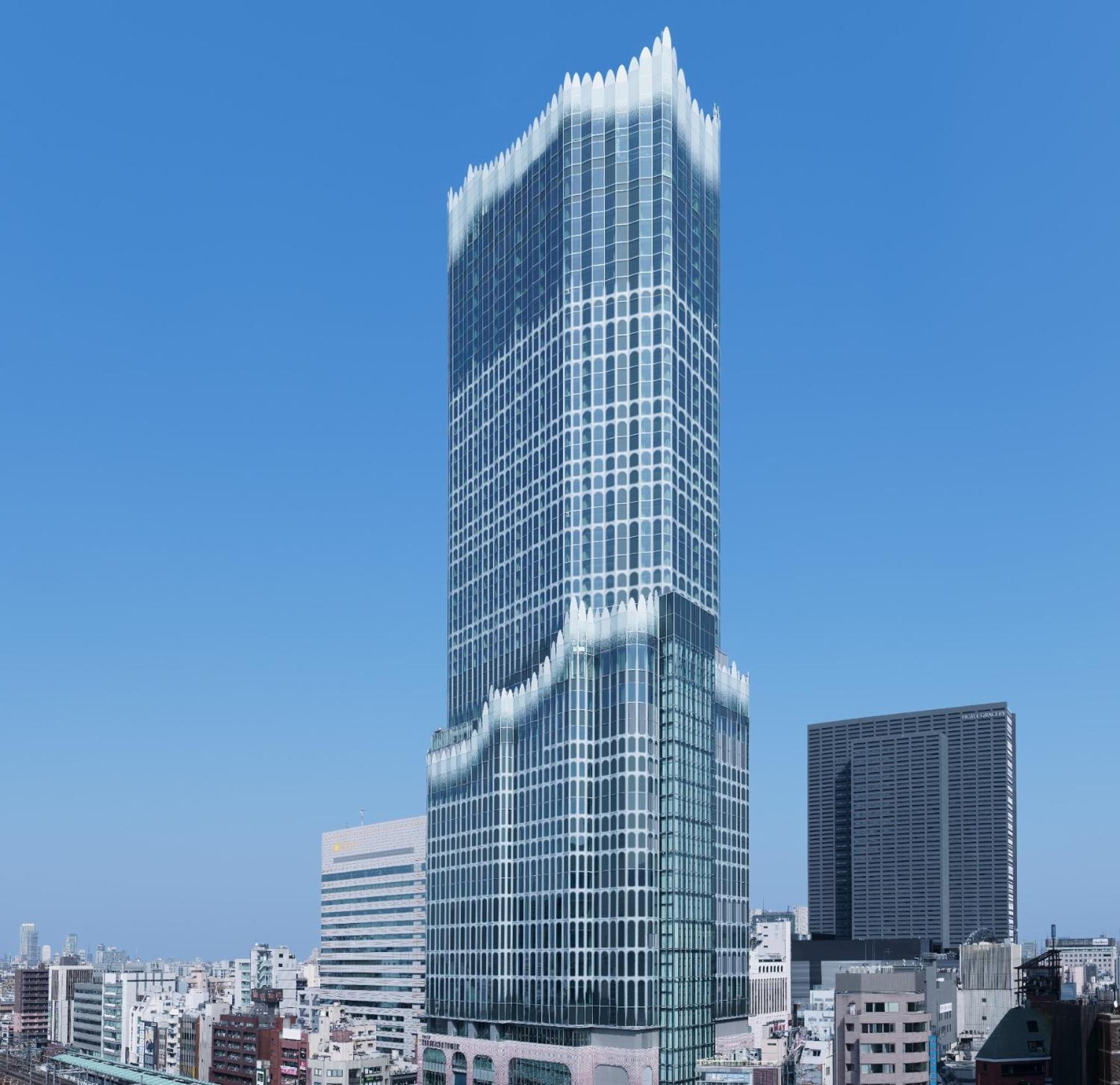


HOTEL GROOVE SHINJUKU, A PARKROYAL Hotel
Rooms from the 18th floor up in the Tokyu Kabukicho Tower, about 700 metres from Shinjuku Station; 9.1 on 3,823 reviews, and its 100 most recent average 9.3, with the views the most praised. There is no real lobby, and Kabukicho's nightlife is right outside.
Book now on:


hotel MONday Asakusa
A simple 3-star about 300 metres north of Senso-ji and a 3-minute walk from the Tsukuba Express; 9.4 on 2,989 reviews, with the location, staff and cleanliness most praised. The lowest rate on this list in every month we sampled; rooms are tight for three, and check-out is at 10 am.
Book now on:


The Tokyo Station Hotel
Inside the 1914 red-brick Tokyo Station building, with a spa and several restaurants; 9.5 on 2,106 reviews, and the highest recent average on this list at 9.6. By far the dearest hotel here, and some rooms overlook the tracks.
Book now on:
Estimated nightly rate for a 3-night stay, 2 adults. Final price on Expedia or Booking.com.Room only. Local taxes and fees are added at checkout and can add roughly 20%.
How We Selected These Workshops
The Local Japan Guides team judged Tokyo chopstick workshops on the things that actually vary between them, because the craft and the hour do not: the neighbourhood, the group cap, how much of the wood selection is free, and what the optional extras cost. We compared price, duration, group size, age limits, inclusions, schedule, meeting point and review volume. The labels on each card describe what that workshop is rather than ranking it by score, because five of the six round to 5.0 and the ratings separate almost nothing between them. We set a floor of 50 reviews, the same standard we use on our other Tokyo workshop pages. One further Tokyo chopstick workshop was active and well rated at the time of writing but carried only five reviews, which is too thin a record to rank, so it is not included here. The six that remain carry between 180 and 5,748 reviews each. Two operators run more than one workshop on this page: Traveling Tokyo has the Shinjuku and Asakusa classes, and Japan Guide Star has the multi-location workshop and the artisan class. We have kept all four because they differ in group size, neighbourhood, schedule and wood selection rather than being the same booking listed twice, and we have named the shared operator in each case so you can see it. We verified every listing against live operator data on October 7, 2026, confirming each was active, Tokyo-based and currently bookable, and we checked review recency on each one. Four of the six had a review posted the day we checked. To be explicit about how this page is made and paid for: we have not taken these workshops ourselves, and nothing here is written as though we had. Our judgements come from operator listing data and published guest reviews. Prices were read from live data on October 7, 2026, and those quoted in yen were converted at that day's rate, so they move with the exchange rate. Booking links are affiliate links and we may earn a commission if you book through them, at no extra cost to you. No operator paid for inclusion, for a label, or for its position in the table.
Frequently Asked Questions
How much does chopstick making cost in Tokyo?+
Between $6 and $9 per person across the six workshops compared here, read from live operator data on October 7, 2026. Four cost $6 and two cost $9. That is the lowest price of any craft workshop we have compared in Tokyo, and every fare includes the workshop, the timber you work and the chopsticks you take home.
How long does a chopstick making workshop take?+
One hour, at all six workshops on this page. Most of that hour goes on sanding, which is where the finish quality is decided. Several studios run hourly or half-hourly start times through the day, so it fits between other plans rather than needing a half-day set aside.
Do you take the chopsticks home the same day?+
Yes, at all six. You shape, sand and finish the pair during the session and carry them out, usually wrapped or in a pouch. Finished chopsticks are flat, light and robust, which makes them the easiest craft souvenir in Tokyo to travel home with.
Where in Tokyo can you make chopsticks?+
Shinjuku, Asakusa, Shibuya, Ginza and Taito. Traveling Tokyo runs classes in Shinjuku and Asakusa, Kurohashi Studio is in Shibuya near the Scramble Crossing, and the artisan workshop is in Taito near Asakusa. Japan Guide Star is the only operator that lets you choose between four districts when you book.
Can children make chopsticks in Tokyo?+
Five of the six accept all ages, including both Traveling Tokyo classes and both Japan Guide Star workshops. The exception is the Asakusa workshop from Sushi Making Tokyo, which sets a minimum age of four. No workshop assumes any prior experience, and tools and materials are supplied.
Is engraving included in a chopstick making workshop?+
Usually not. Kurohashi Studio in Shibuya charges ¥1,000 for engraving, and the Asakusa branch of Traveling Tokyo offers engraving and colours as paid personalisation. Decide at booking rather than at the bench, because it changes what you pay rather than what you do.
How many wood types can you choose from?+
It depends on the operator and it is the main thing that separates them. Japan Guide Star includes three types from a range of more than ten. Traveling Tokyo includes two, with more than eight available at its Asakusa branch and premium timbers as a paid upgrade. The Asakusa workshop from Sushi Making Tokyo supplies a standard wood with no choice.
Is chopstick making worth doing in Tokyo?+
At $6 for an hour it is the lowest-risk craft workshop we have compared in Tokyo, and the review record is unusually strong: these six hold more than 10,000 reviews between them and five of the six round to 5.0. It is a simple craft rather than a deep one, so if you want something more technical, our Tokyo craft workshop guide compares kintsugi, calligraphy and pottery.
Affiliate note: Some links on this page are affiliate links. If you book through them, we may earn a small commission at no additional cost to you.