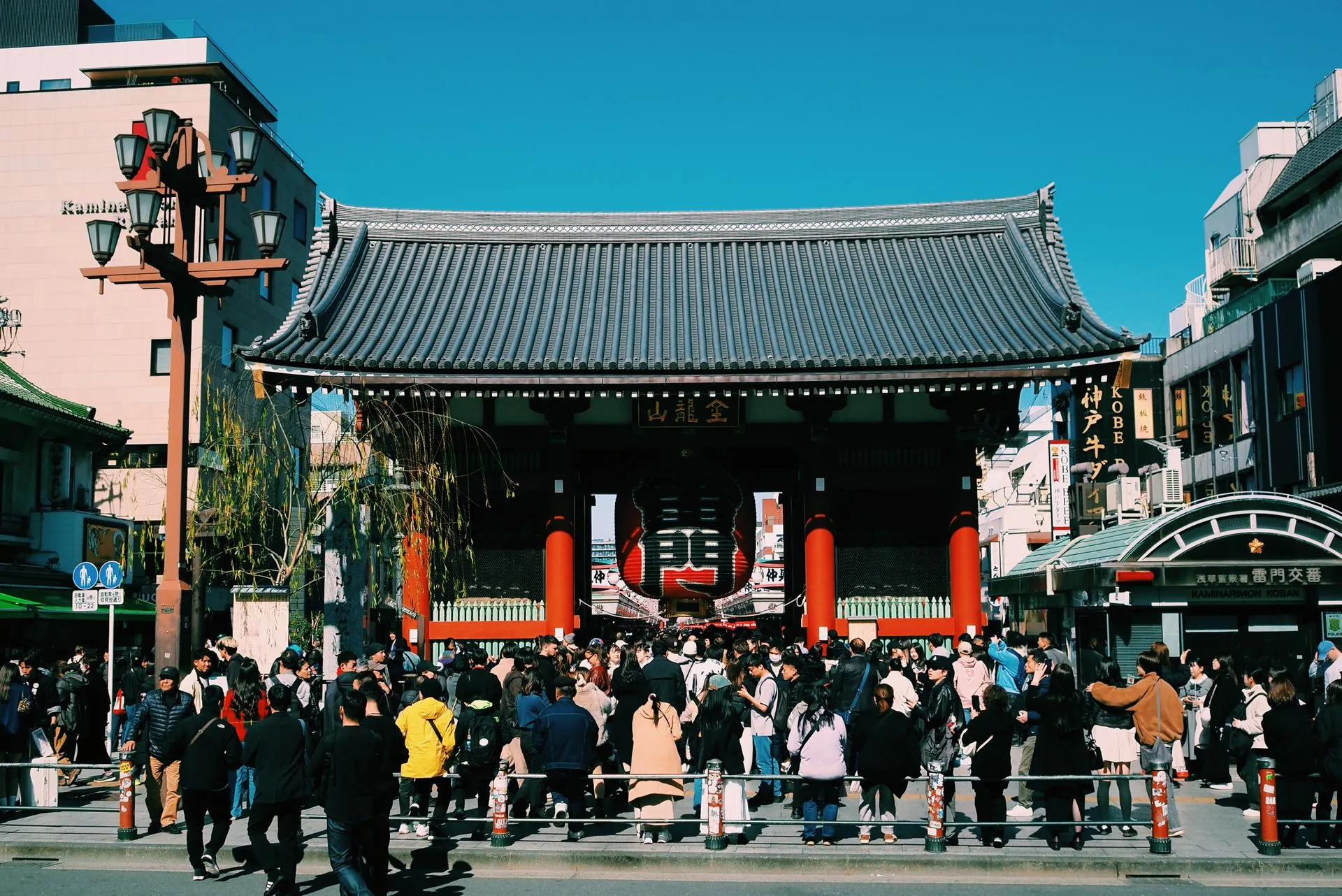
Six guided walks around Senso-ji and old Asakusa compared on price, group size, duration and start times, from a $13 two-hour walk to an $82 walk with lunch.
What You Should Know
- Senso-ji is free and the grounds never close, so a tour buys you explanation and routing rather than access. The main hall opens at 6:00am from April to September and 6:30am from October to March.
- Group caps run from 7 to 30. Asakusa is one of Tokyo's busiest temple precincts, and the size of your group changes the walk here more than it would anywhere else in the city.
- Five of these six run exactly two hours and cover the same core: Kaminarimon, Nakamise, the main hall and the surrounding back streets. The differences are group size, start time and what gets added.
- Only one of the six includes food. The rest are guide fees, so budget separately for anything you eat on Nakamise.
Asakusa Walking Tours and Senso-ji
A guided walk around Senso-ji and old Asakusa starts at $13 for two hours, and what you are paying for is interpretation rather than entry. The temple is free, the grounds are open around the clock, and nobody checks a ticket at the gate. A guide is there to tell you what you are looking at, steer you through a precinct widely reported to draw around 30 million visitors a year, and show you the streets behind it that most day visitors never turn into.
Senso-ji was founded in 628 and is the oldest temple in Tokyo, though almost nothing you see is that old: the main hall, the gate and the pagoda were destroyed in the firebombing of March 10, 1945, and what stands today is a 1950s and 1960s reconstruction. That gap between the founding date and the buildings is one of the things a good guide handles well and a guidebook usually flattens.
The six walks compared below run from $13 to $82 and from two hours to three. Five of them are two-hour shared walks covering the same ground, which makes group size, start time and price the real variables. This page covers guided sightseeing walks of Asakusa. If you want to eat your way through the district instead, our Tokyo food tour comparison covers the Asakusa food walks, and for walks in other parts of the city see our Tokyo walking tour comparison or our Imperial Palace tour guide. For Tokyo's other old town, our Yanaka walking tour guide covers the temple district to the north, and our Meiji Shrine tour comparison covers the city's great Shinto shrine. If you want to make something nearby, our Japanese knife workshop guide and ring making workshop guide compare hands-on classes in Asakusa's streets. Akihabara is about 15 minutes away, and our Akihabara guide covers it; for the whole city, see our best things to do in Tokyo guide.
Goen Japan: Asakusa Senso-ji Temple and Old Town Walking Tour
Scored on five criteria: review volume (1,170, the deepest here), rating (5.0, with 98.4 percent of ratings at five stars), group cap (10), duration (2 hours) and five daily start times. It loses on price, at $27 against $13 for the cheapest. We weighted the group cap heavily because Asakusa is one of Tokyo's busiest temple precincts, where a group of 30 and a group of 10 are different experiences.
Book NowAsakusa Walking Tours: Side-by-Side Comparison
| Operator | Price | Online Rating | Format | Ages | Capacity | Duration | Days Offered | Start Times | Extras |
|---|---|---|---|---|---|---|---|---|---|
| Most Reviewed Goen Japan Asakusa Senso-ji & Old Town Book Now |
$27 | ⭐ 5.0 (1,170 reviews) Read Reviews |
Shared walk | All ages | 10 | 2 hours | Daily | 9:00am to 6:00pm, five slots | Deepest review record here; capped at 10 rather than 30 |
| Localized Walking & Food Tours Asakusa Senso-ji & Old Tokyo Book Now |
$24 | ⭐ 4.9 (1,101 reviews) Read Reviews |
Shared walk | All ages | 10 | 2 hours | Daily | 8:30am to 7:00pm, six slots | Only walk here with both an 8:30am and a 7:00pm start |
| Japan Guide Star Asakusa & Sensoji, Oldest Temple Book Now |
$13 | ⭐ 5.0 (995 reviews) Read Reviews |
Shared walk | 6+ | Up to 30 | 2 hours | Daily | 9:00am to 6:30pm, six slots | Highest share of five-star ratings here, 98.8 percent; largest group |
| Traveling Tokyo Asakusa Senso-ji & Old Town Book Now |
$14 | ⭐ 4.9 (352 reviews) Read Reviews |
Shared walk | All ages | 15 | 2 hours | Daily | 10:00am or 1:00pm | Mid-size group at a near-budget price; only two departures |
| MagicalTrip Asakusa Cultural Walk & Matcha Making Book Now |
$82 | ⭐ 4.9 (285 reviews) Read Reviews |
Walk plus workshop | All ages | 7 | 3 hours | Daily | 11:00am | Only tour here including lunch, snacks and a matcha session |
| Travel Japan Together Tokyo Asakusa, Senso-ji & Shrine Book Now |
$22 | ⭐ 5.0 (109 reviews) Read Reviews |
Shared walk | All ages | 15 | 2 hours | Daily | 8:00am only | Earliest start of the six; covers Senso-ji and Asakusa Shrine |
ℹ️ All tours and information were reviewed against current operator listings, availability and recent guest reviews on October 7, 2026. Prices quoted in yen or euros by the operator are converted to US dollars at the rate in use on that date and will move with the exchange rate. Prices and availability may change, so always confirm with the operator before booking.
What to Expect on an Asakusa Walking Tour
- 0110 min early
Meet at the gate
The Kaminarimon police box, the Starbucks beside it, or the Burger King by Asakusa station Exit 4. Guides hold a board or a sign.
- 02First 15 min
Kaminarimon
The 700kg lantern, the gods of thunder and wind in the alcoves, and why a 628 temple has a 1960 gate.
- 03Next 30 min
Nakamise
250 metres of stalls from the gate to the temple, with stops for the older shops and the snacks worth buying.
- 04Middle
The main hall and the rituals
The incense cauldron, the water basin, the omikuji fortunes, and the five-storey pagoda alongside.
- 05Later
Asakusa Shrine and the back streets
The Shinto shrine beside the temple, then the lanes behind Nakamise where the crowds thin out.
- 062 to 3 hrs
Finish near the station
Most walks end close to where they started, within a few minutes of Asakusa station and its four lines.
- 01
Meet at the gate
The Kaminarimon police box, the Starbucks beside it, or the Burger King by Asakusa station Exit 4. Guides hold a board or a sign.
10 min early - First 15 min02
Kaminarimon
The 700kg lantern, the gods of thunder and wind in the alcoves, and why a 628 temple has a 1960 gate.
- 03
Nakamise
250 metres of stalls from the gate to the temple, with stops for the older shops and the snacks worth buying.
Next 30 min - Middle04
The main hall and the rituals
The incense cauldron, the water basin, the omikuji fortunes, and the five-storey pagoda alongside.
- 05
Asakusa Shrine and the back streets
The Shinto shrine beside the temple, then the lanes behind Nakamise where the crowds thin out.
Later - 2 to 3 hrs06
Finish near the station
Most walks end close to where they started, within a few minutes of Asakusa station and its four lines.
Every walk here meets at a fixed landmark rather than collecting you, and the meeting points cluster tightly: four of the six gather at or beside the Kaminarimon gate, at the police box or the Starbucks next to it. None includes hotel pickup. Asakusa station is served by four lines, so reaching any of them is straightforward from most of central Tokyo.
Our take (group size matters more here than elsewhere): We rate group cap above almost everything else on this particular page, and we would not say the same about a walk through the Imperial Palace gardens. Asakusa is a confined precinct that handles enormous visitor numbers, Nakamise is a 250-metre corridor, and keeping thirty people together in it is a logistical exercise that eats into the two hours you paid for. The caps here run from 7 to 30, which is the widest spread of any variable in the table.
The standard two-hour route is consistent across operators: you gather at or near Kaminarimon, walk the length of Nakamise with stops to explain the stalls and the gate guardians, reach the main hall and the incense cauldron, cover the pagoda and usually Asakusa Shrine, then spend the back half in the side streets where the guide has more room to talk. These are flat, paved and slow. None is strenuous.
What varies is the ending. Some finish back at the gate and some end deeper in the back streets near Hoppy Street. The exception to the whole pattern is the three-hour walk from MagicalTrip, which breaks off partway through for a matcha session and lunch, so roughly half of it is spent sitting down.
Asakusa Walking Tours, Compared
Grouped by what each walk delivers rather than ranked one to six. Our pick leads on review depth and group size. Five of the six are two-hour shared walks covering the same core route, so the labels describe format, timing and price instead of implying a quality order that the ratings do not support.
Goen Japan: Asakusa Senso-ji & Old Town
Two hours around Senso-ji, Nakamise and the surrounding streets with the group capped at 10. It carries the deepest review record of any Asakusa walk at 1,170, and 1,151 of those are five stars, 98.4 percent. Five start times run from 9:00am to 6:00pm daily. At $27 it is the middle of this range rather than the cheap end, and the thing you are paying for is the cap: the same two hours from Japan Guide Star costs $13 and allows up to 30 people. In a precinct this crowded, that is the difference between a conversation and a crowd following a flag.
Check availabilityLocalized: Asakusa Senso-ji & Old Tokyo
The same two-hour format and the same cap of 10, at $24, with six departures that stretch further across the day than anything else here: 8:30am at one end and 7:00pm at the other. Rated 4.9 from 1,101 reviews, the second deepest record on this page. Its five-star share is 93.9 percent, the lowest of the three big-volume walks, which is worth knowing when the gap to our pick is only $3. The 8:30am slot is the one to take if you want Nakamise before the shops open and the crowds build.
Check availabilityJapan Guide Star: Asakusa & Sensoji
The cheapest walk here and half the price of our pick for the same two hours, with a 5.0 from 995 reviews and the highest five-star share on this page at 98.8 percent. The trade is the group, which runs up to 30, and a minimum age of six. Six start times daily from 9:00am to 6:30pm. If the budget matters more than the group size, this is well reviewed enough that we would not argue with it, and it is the same operator and format we rate highly in Shibuya and Shinjuku.
Check availabilityTraveling Tokyo: Asakusa Senso-ji & Old Town
A dollar more than the cheapest walk for a cap of 15 rather than 30, which is the best group-size-per-dollar on this page. Rated 4.9 from 352 reviews. The catch is scheduling: it runs only two departures, 10:00am and 1:00pm, both of which land in the busiest part of the Asakusa day. Worth noting that its listing counts admission to Senso-ji and Nakamise among the inclusions, though both are free to every visitor, so read that as a description of the route rather than a saving.
Check availabilityMagicalTrip: Asakusa Cultural Walk & Matcha Making
Three hours and the only tour here that feeds you: lunch (okonomiyaki or monjayaki with a drink, with a vegetarian option), Japanese snacks and sweets along the way, and a matcha-making session. Group capped at 7, the smallest on this page, rated 4.9 from 285 reviews, with tour photos included. One departure a day at 11:00am. At $82 it is a different purchase from the $13 walks: closer to a half-day cultural experience with lunch attached than a guided stroll.
Check availabilityTravel Japan Together: Asakusa, Senso-ji & Shrine
An 8:00am start and nothing else on the schedule, which is the single most useful thing any operator here offers. Senso-ji's main hall opens at 6:00am and the crowds arrive with the Nakamise shutters, so an 8:00am walk sees the precinct in a state most visitors never do. Rated 5.0 from 109 reviews, capped at 15, two hours. It is also one of the few that explicitly covers Asakusa Shrine, the Shinto shrine beside the temple that most itineraries skip.
Check availabilityThe five two-hour shared walks cover the same core ground, so if two appeal equally, choose on group cap and start time rather than on the itinerary description. A walk of 10 at 8:30am and a walk of 30 at 1:00pm are different days out even though the route on paper is identical.
Do You Need a Tour for Senso-ji?
No. Senso-ji is free, the grounds are open 24 hours a day, and there is no ticket, no booking and no queue to get in. The main hall opens at 6:00am from April to September and 6:30am from October to March, closing at 5:00pm, but the gate, Nakamise, the pagoda and the precinct itself are accessible at any hour. Anyone telling you a tour is required to enter Senso-ji is wrong.
So the honest question is not whether you can visit alone, but whether a guide adds enough for the money. On a $13 to $27 walk, these are the things we think it does add.
- Which buildings are old and which are not. Senso-ji dates to 628, but the main hall, the Kaminarimon gate and the five-storey pagoda are postwar reconstructions, rebuilt after the March 10, 1945 firebombing. Standing in front of a 1958 building believing it is 1,400 years old is the single most common misreading of the site.
- Asakusa Shrine, which most visitors walk straight past. It sits immediately to the right of the main hall, it is Shinto rather than Buddhist, and it is one of the few structures in the precinct that survived 1945. The temple and shrine sharing a courtyard is a useful, concrete way into how the two religions coexist in Japan.
- The rituals, done properly. The temizu water basin, the incense cauldron, the omikuji fortune drawers and what to do with a bad one. These are not complicated, but they are the sort of thing you either get shown or get wrong.
- The streets behind Nakamise. Nakamise is 250 metres of souvenir stalls and it is where almost everyone stays. The lanes on either side are where the older shops, the craftspeople and the quieter food are, and routing is most of what a local guide is for.
And here is where we would skip it.
| Your situation | Our call |
|---|---|
| You have half a day and want context on Tokyo's oldest temple | Take a two-hour walk, $13 to $27 |
| You are passing through for an hour on the way to Skytree | Go alone; an hour is photos, not a tour |
| You want the precinct quiet and nearly empty | Go alone at 6:30am, or book the 8:00am walk |
| You are travelling with children and want the rituals explained | Take a walk; the small-group ones cap at 7 to 10 |
| You have already done a general Tokyo walking tour that included Asakusa | Skip it; the overlap is close to total |
| You want to eat your way through the district | Book a food tour instead, not a sightseeing walk |
Our take (the overlap with general Tokyo tours is real): Asakusa is on most city-wide Tokyo walking tours and most Tokyo morning bus tours, because it is the obvious stop. If you have one of those booked, a dedicated Asakusa walk will repeat a good deal of it. The case for the dedicated walk is depth and time at one site; the case for the city tour is breadth. Doing both in the same trip is the one combination we would not recommend.
How Much Does an Asakusa Walking Tour Cost?
Guided walks of Asakusa run from $13 to $82 per person, and five of the six are $27 or less. The spread is less meaningful than it looks, because the top of the range is not a better version of the bottom: it is a longer walk with lunch and a workshop attached.
Five walks: Japan Guide Star at $13, Traveling Tokyo at $14, Travel Japan Together at $22, Localized at $24 and our pick from Goen Japan at $27. All are two hours, all cover the same core, and all are guide fees with no food and no transport. Group caps across these five run from 10 to 30, which is where the money actually goes.
MagicalTrip's three-hour cultural walk, the only tour here that is not purely a guide fee. It includes a matcha-making session, Japanese snacks along the way and an okonomiyaki or monjayaki lunch with a drink, with the group capped at 7. Judge it against a walk plus a meal bought separately rather than against the $13 walks.
Senso-ji itself costs nothing, so every dollar here is the guide. That makes the cheap end genuinely cheap rather than a stripped-down version of something better: at $13 for two hours, Japan Guide Star is the lowest-risk way to find out whether guided walking suits you, as long as a group of up to 30 does not put you off.
Best Time to Visit Senso-ji
Asakusa is busy by mid-morning and stays busy until the Nakamise stalls shut in the early evening. Because the grounds never close, the timing choice is wider than at most Tokyo sights, and it changes the visit more than the choice of operator does.
The quietest hours by a distance. The main hall opens at 6:00am from April to September and 6:30am from October to March, and Nakamise's shutters stay down until the stalls open, which means you see the painted shutter artwork most visitors never do. Travel Japan Together's 8:00am and Localized's 8:30am are the only guided starts in this window.
The busiest stretch and when most tours run. Nakamise is shoulder to shoulder, the incense cauldron has a crowd around it, and this is when a group cap of 30 becomes hard work. If you are booking in this window, we would pay the premium for a smaller group.
The stalls close and the precinct empties, but Kaminarimon, the pagoda and the main hall are floodlit and the grounds stay open. The main hall is shut, so you see it from outside. Three walks run departures at 5:00pm or later: Goen Japan at 6:00pm, Japan Guide Star at 6:30pm and Localized at 7:00pm.
Seasonally there is no bad time, since nothing here depends on weather beyond your own comfort, and all six currently list daily departures. The exception is the Sanja Matsuri in May, Asakusa's largest festival, when the precinct is extraordinary and completely overwhelmed in equal measure.
Our Take
Across the 150 most recent reviews of our top pick, not one sits below four stars, and the recurring subject is not the route but the guide and what they explained: which building is Buddhist and which is Shinto, how to draw an omikuji, what the carved dragon under the Kaminarimon lantern is doing there. On a guide-fee walk that is the entire product. Since you cannot choose your guide, book on the two things you can control, group cap and start time, and leave the rest to the operator's consistency.
Tips for an Asakusa Walking Tour
- Book the earliest slot you can stand. The 8:00am and 8:30am starts are the only ones that reach Nakamise before it fills. Everything from 10:00am onward sees the same precinct at four or five times the density.
- Check the group cap before the price. It ranges from 7 to 30 here, a wider spread than the price range in percentage terms, and in a corridor as narrow as Nakamise it changes the walk more than any other variable.
- Carry coins. Omikuji fortunes are typically 100 yen, the incense and the offering boxes take coins, and the older Nakamise stalls are not all card-friendly.
- If you draw a bad fortune, tie it up. Omikuji are drawn from numbered drawers, and an unlucky one gets tied to the rack beside them rather than taken with you. Guides will show you, but it is worth knowing before you draw.
- Do not confuse the temple with the shrine. Senso-ji is Buddhist; Asakusa Shrine, a few steps to the right of the main hall, is Shinto. They have different etiquette, and the shrine is the older surviving structure of the two.
- Dress for standing in a crowd. These are slow routes with frequent stops rather than long walks, so the comfort issue is usually heat and queuing rather than distance.
- Nakamise closes earlier than you expect. The stalls are independent shops keeping their own hours, not the temple's, and as a rule they shut in the early evening, so an evening walk is a walk through a lit but shuttered street. That is a feature if you want the architecture and a disappointment if you wanted to shop.
- Visiting in December? Our Tokyo in December guide covers the Hagoita-ichi fair at Senso-ji on December 17 to 19 and the New Year crowds that build from late on December 31.
- Visiting in May? Our Tokyo in May guide covers the Sanja Matsuri, expected on May 14 to 16, 2027, when Asakusa's streets fill with portable shrines and hotel rates peak.
- Visiting in July? Our Tokyo in July guide covers the Hozuki-ichi at Senso-ji on July 9 and 10 and the Sumida River fireworks, expected on the last Saturday of July.
- If Skytree is on your list, do it the same trip. It is a 15 to 20 minute walk across the Sumida from Senso-ji, and several Asakusa itineraries include the view of it from the river bank.
Where to Stay in Tokyo
Staying in Tokyo or planning a trip? Here are three well-reviewed hotels, with live prices from our booking system. Rooms at the best-rated hotels are usually the first to go, especially in peak season and over holidays, so it's worth locking in your stay before availability fills up.
Compare Live Tokyo Hotel Prices
Live rates for a three-night stay for two adults, checking in about a month from now. Change the dates at checkout and book with instant email confirmation.
- Instant confirmation by email
- Live rates, not brochure prices
- Free cancellation on selected rates
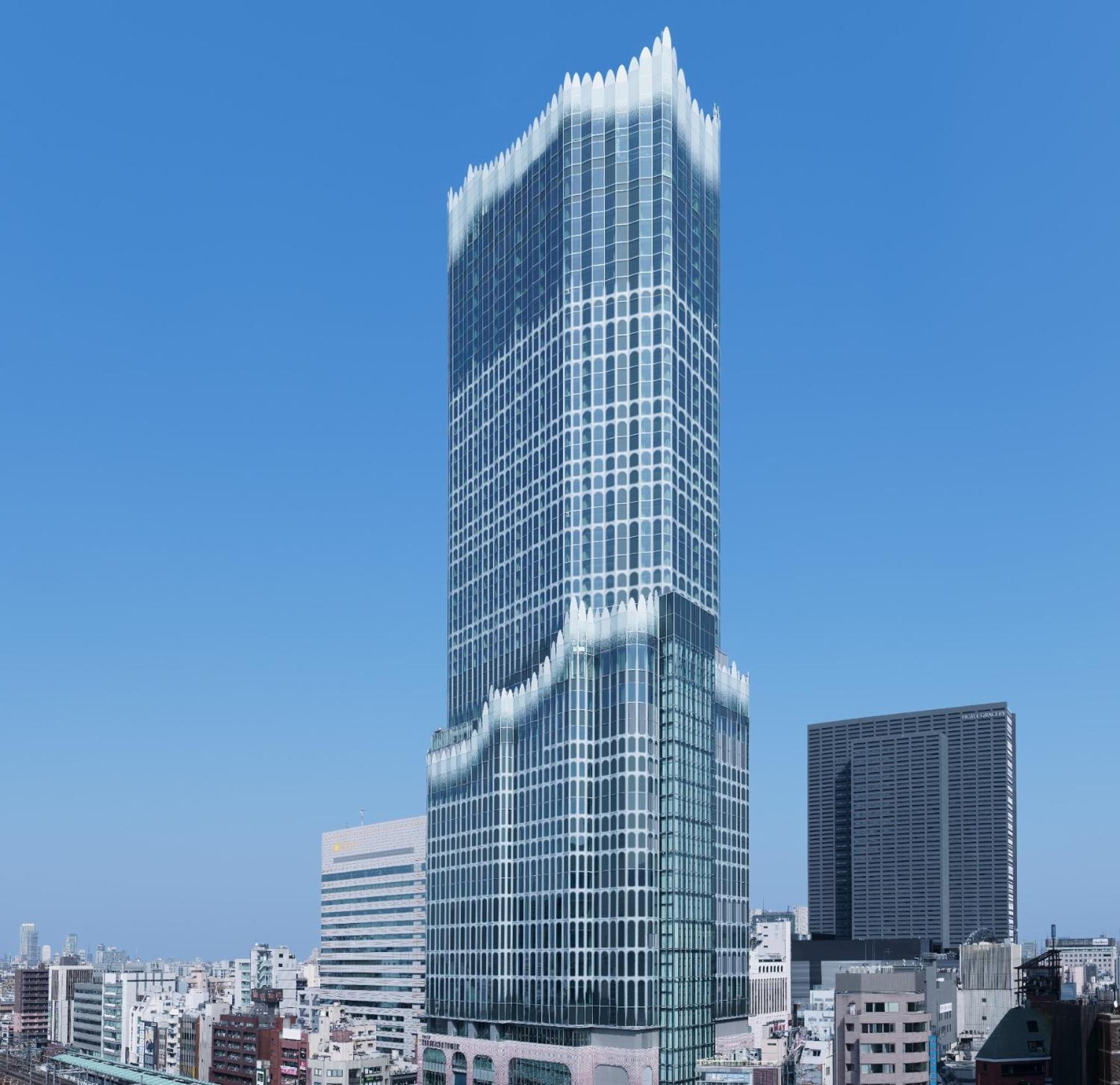


HOTEL GROOVE SHINJUKU, A PARKROYAL Hotel
Rooms from the 18th floor up in the Tokyu Kabukicho Tower, about 700 metres from Shinjuku Station; 9.1 on 3,823 reviews, and its 100 most recent average 9.3, with the views the most praised. There is no real lobby, and Kabukicho's nightlife is right outside.
Book now on:


hotel MONday Asakusa
A simple 3-star about 300 metres north of Senso-ji and a 3-minute walk from the Tsukuba Express; 9.4 on 2,989 reviews, with the location, staff and cleanliness most praised. The lowest rate on this list in every month we sampled; rooms are tight for three, and check-out is at 10 am.
Book now on:


The Tokyo Station Hotel
Inside the 1914 red-brick Tokyo Station building, with a spa and several restaurants; 9.5 on 2,106 reviews, and the highest recent average on this list at 9.6. By far the dearest hotel here, and some rooms overlook the tracks.
Book now on:
Estimated nightly rate for a 3-night stay, 2 adults. Final price on Expedia or Booking.com.Room only. Local taxes and fees are added at checkout and can add roughly 20%.
How We Selected These Walks
The Local Japan Guides team built this page around guided sightseeing walks of Asakusa and Senso-ji. We deliberately excluded three adjacent categories: Asakusa food tours, which we compare separately; kimono rental, rickshaw rides and craft workshops, which are experiences rather than walks; and city-wide Tokyo tours that stop at Asakusa for 40 minutes, which answer a different question. We ranked on the things that actually vary between walks covering the same ground: group cap, start times, duration, price and review depth. We weighted group cap more heavily than we would on most pages, because Asakusa's visitor density makes it the variable travellers feel most. We also set a floor of 100 reviews. A tour with a dozen ratings may well be excellent, but a 5.0 built from 14 reviews carries far less information than a 5.0 built from 995, and we would rather compare six walks we can speak about with confidence than pad the table to ten. That rule removed four otherwise reasonable tours, including the cheapest Asakusa walk we found at $11 and the only private guide, so it costs the page some range. We think the tradeoff is worth it. We verified every listing against live operator data on October 7, 2026, confirming each was active, Asakusa-based and currently bookable, and we checked review recency on all of them. Separately from the review floor, we excluded a highly rated private Yanaka and Asakusa walk because its newest review was 485 days old and it had none in the past year, and a 90-minute walk with only two reviews in the past twelve months. To be explicit about how this page is made and paid for: we have not taken these walks ourselves, and nothing here is written as though we had. Our judgements come from operator listing data and published guest reviews, with review counts and ratings captured in a single snapshot on October 7, 2026 so the figures reconcile. Prices quoted in yen and euros were converted at that day's rate and move with the exchange rate. Booking links are affiliate links and we may earn a commission if you book through them, at no extra cost to you. No operator paid for inclusion, for a label, or for its position in the table.
Frequently Asked Questions
Do you need a tour to visit Senso-ji?+
No. Senso-ji is free, the grounds are open 24 hours a day, and there is no ticket or booking of any kind. The main hall opens at 6:00am from April to September and 6:30am from October to March, closing at 5:00pm. A guided walk buys explanation and routing, not access.
How much is an Asakusa walking tour?+
Between $13 and $82 per person across the six compared here, and five of them are $27 or less. The cheap end is a two-hour guided walk with no extras. The top end is a three-hour walk with a matcha session and lunch included, which is a different kind of purchase rather than a better guide.
How long does an Asakusa walking tour take?+
Five of the six run two hours, which is enough for Kaminarimon, Nakamise, the main hall, Asakusa Shrine and the back streets at a conversational pace. The longest is three hours, and the extra hour goes on a matcha session and lunch rather than more walking.
What time does Senso-ji open?+
The main hall opens at 6:00am from April to September and 6:30am from October to March, and closes at 5:00pm. The grounds themselves, including Kaminarimon, Nakamise and the pagoda, are open at all hours. The Nakamise stalls are independent shops that keep their own hours rather than the temple's, and as a rule open mid-morning and shut in the early evening.
What is the best time of day to visit Asakusa?+
Before 9:00am if you want it quiet. The precinct is noticeably calmer early, and the Nakamise shutters, which carry painted artwork, are still down. Only two guided walks here start that early: an 8:00am and an 8:30am. From mid-morning to late afternoon it is extremely busy.
Is Senso-ji or Asakusa Shrine the one to visit?+
Both, and they are a few steps apart. Senso-ji is the Buddhist temple with the famous gate and pagoda. Asakusa Shrine is Shinto, sits beside the main hall, and is one of the few structures in the precinct that survived the 1945 firebombing, which makes it older than the temple buildings around it.
Are Asakusa walking tours suitable for children?+
Mostly yes. Five of the six here accept all ages. The one exception is Japan Guide Star's $13 walk, which sets a minimum age of six. The smaller-group tours, capped at 7 to 10, suit families better in a crowded precinct than the walk that allows up to 30.
Is Asakusa worth visiting if I already have a Tokyo city tour booked?+
Probably not as a second guided visit. Asakusa is on most city-wide Tokyo walking tours and morning bus tours, so the overlap is close to total. A dedicated walk makes sense if you want depth at one site, but doing both in the same trip is the combination we would avoid.
Affiliate note: Some links on this page are affiliate links. If you book through them, we may earn a small commission at no additional cost to you.